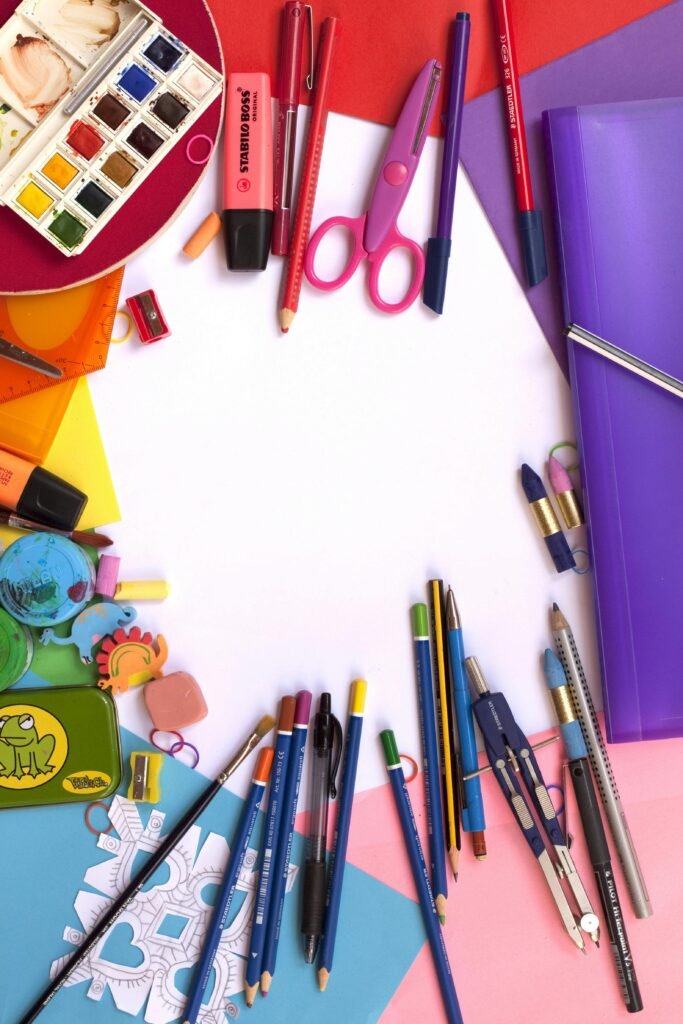
Homeschooling Arts and Crafts: Why Creative Time Matters More Than You Think
There’s a quiet pressure in homeschooling to prove we’re “doing enough.” Enough math. Enough reading. Enough structure. Somewhere in that rush, arts and crafts often get pushed to the side—treated like a bonus activity…..if there’s time left over.
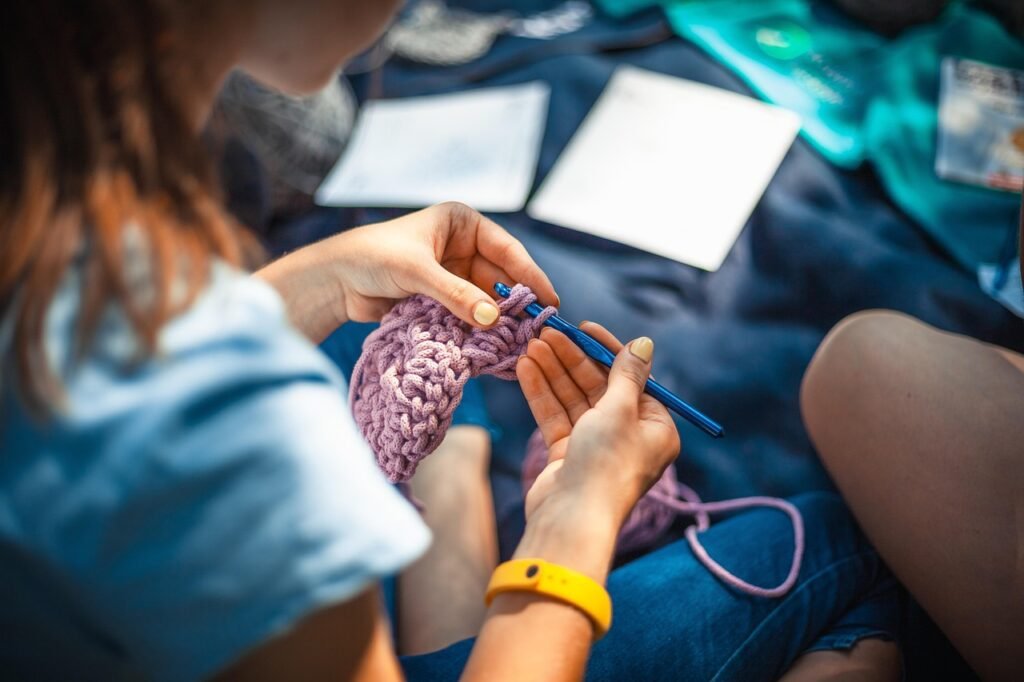
Here’s the truth: creative time isn’t extra. It’s essential. And it doesn’t have to be hard.
When we intentionally build arts and crafts into our homeschool days—both free expression and structured instruction—we give children something academics alone can’t: space to become whole, confident humans.
Why Children Need Time to Express Themselves
Children experience big emotions long before they have the vocabulary to explain them. Art becomes their language.
When kids paint, draw, sculpt, cut, glue, or design, they aren’t just making something pretty for the fridge. They’re:
- Processing emotions they don’t know how to name
- Practicing decision-making and problem-solving
- Learning perseverance through trial and error
- Building confidence in their own ideas
In a homeschool environment—where children often spend more time with family and fewer peers—creative outlets are even more important. Art gives them autonomy. It’s one place where there is no test, no wrong answer, and no comparison.
Art becomes a space that belongs entirely to them. A place where they can explore their thoughts, emotions, and ideas without interruption or expectation. There are no tests to pass, no standards to measure up to, and no one else’s work to compare theirs against. Just freedom. In that space, children learn to trust themselves, make choices, and express who they are—quietly building confidence in ways no worksheet ever could.
Free Art vs. Structured Art (and YES you need both)
Not all art time serves the same purpose. A strong homeschool rhythm includes both open-ended creative play and structured art instruction.
Free Art: Creativity Without Rules
Free art is child-led and minimally directed. A free for all, a chaotic room of gloopy Elmer’s and glittered smeared googly eyes with marker covered hands heading straight for your new white blouse….
Though free art does serve a purpose, other than raising your blood pressure and clogging your vacuum, it also doesn’t have to be scary or cause PTSD. Free art looks like:
- A basket of supplies within reach
- No examples for your child to copy
- No expectations of a final product for your child to compare their work to
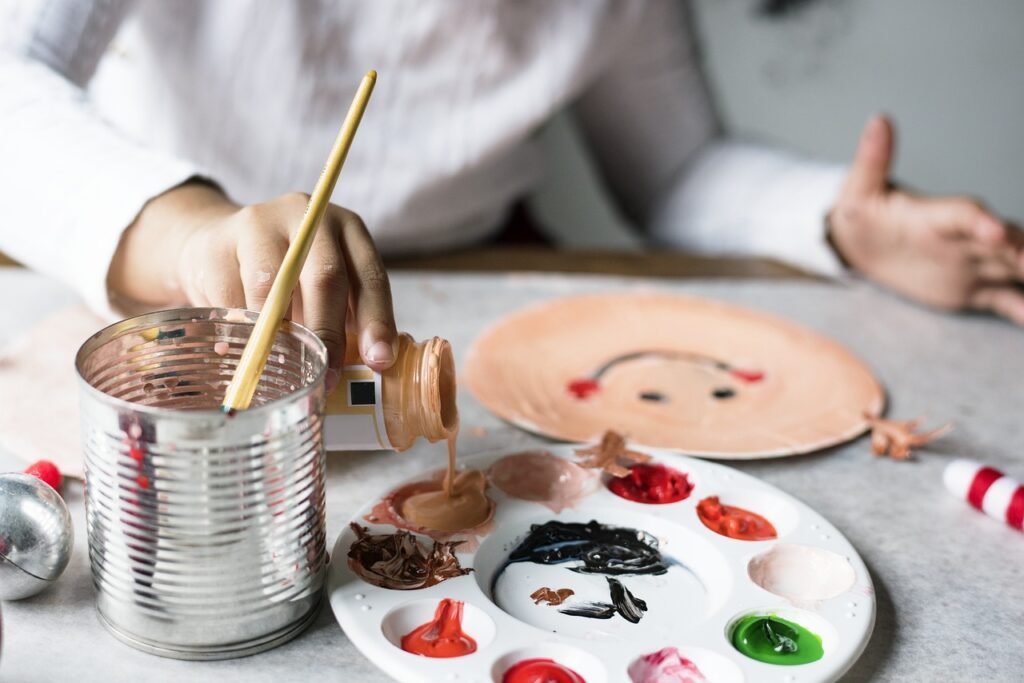
Free art is whatever your child dreams of doing for that day. It encourages imagination, independence, and self-trust. Children learn that their ideas matter and that creativity doesn’t need approval to exist. Here’s the beauty of free art, and really all art, after all the mess is made and you step back and admire their wonderful masterpiece that could outsell the most expensive Picasso, if you pitch it right, they may even help you clean up afterwards, however it’s unlikely so don’t get your hopes up.
Structured Art: Skills With Intention
Structured art involves guidance and instruction. You can follow a pre-planned purchased art curriculum, find a YouTube channel and follow along, or join an art co-op that host a weekly or monthly art class. You also can simply make up what fits your homeschooling schedule, and this might include:
- Studying famous artists or art movements- your local librarian is a great resource for this or your local fine arts museum!
- Step-by-step projects- local craft store have plenty of these or even putting together a high-count puzzle as a family counts!
- Learning techniques like shading, perspective, or color theory- head on over to YouTube for this one!!
Structured art builds:
- Focus and patience
- Fine motor skills- definitely helpful in other areas of school and life as well! More on that later!!
- The ability to follow directions- Remember Simone Says?
- Art appreciation and cultural awareness-
Together, free and structured art create balance—creativity paired with skill, freedom supported by foundation. When all of this is mixed and blended together, you have one well balanced kiddo, and that is definitely what it is all about.
The Hidden Academic Benefits of Arts and Crafts
Arts and crafts support learning across subjects, even when it doesn’t look like “school.”
Creative work naturally reinforces:
- Math: patterns, symmetry, measurement, fractions
- Science: cause and effect, materials, textures, experimentation
- Language Arts: storytelling, descriptive language, sequencing
- History & Culture: time periods, traditions, global perspectives
Art also strengthens attention span. Children who regularly engage in creative work often show improved focus and stamina in academic subjects.
How to Build Art Time Into Your Homeschool Day
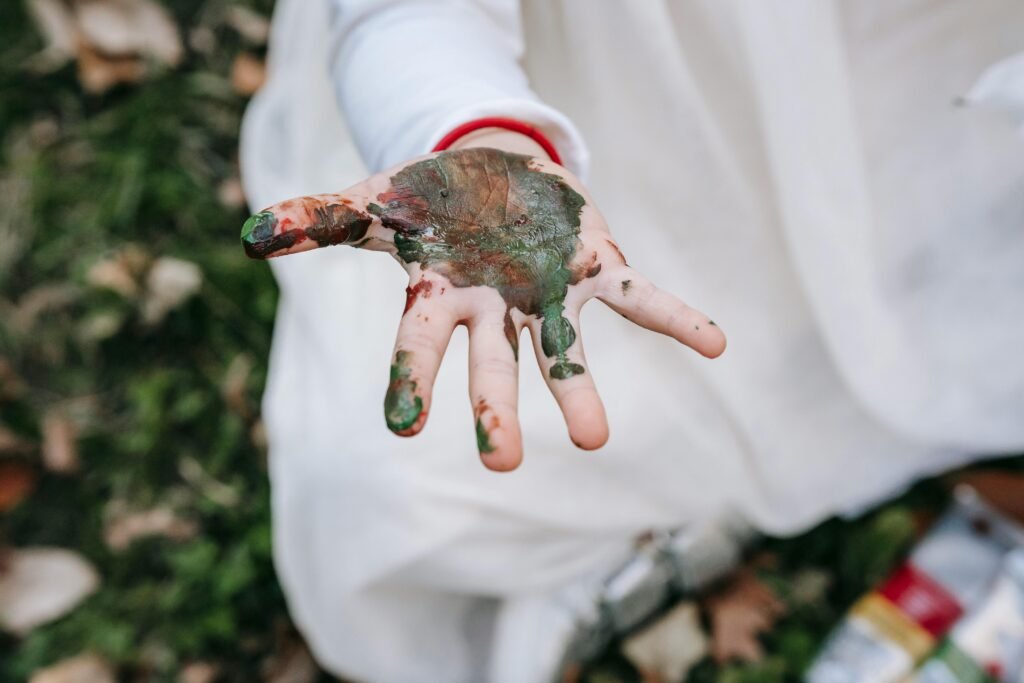
Art doesn’t need to be complicated or Pinterest-perfect to be meaningful.
Practical ways to include it:
- Schedule art 2–3 times per week
- Alternate between free art days and guided projects
- Keep supplies accessible—not locked away for “special occasions”
- Allow messes (learning is rarely tidy)
Even 30 minutes of intentional creative time can reset moods, improve behavior, and restore flow to the homeschool day.
Homeschooling isn’t about racing through curriculum or producing perfect worksheets. It’s about raising thoughtful, capable, confident humans.
Why This Matters in the Bigger Homeschooling Picture
Arts and crafts do so much more than fill time in our homeschool days. They help children discover who they are and how they think, giving them space to explore ideas and emotions in ways words sometimes can’t. Through creating, they learn how to express what they feel, take risks, and work through frustration—emerging with a quiet sense of pride in something they made with their own hands.
Art teaches children that learning doesn’t have to feel heavy or forced. It can be joyful, meaningful, and deeply personal. And along the way, they develop responsibility too—caring for their supplies, respecting shared spaces, and cleaning up their creative messes (a small but very real parenting win).
When we intentionally protect creative time in our homeschool, we aren’t falling behind or wasting valuable learning hours. We’re investing in our children’s confidence, emotional growth, and lifelong love of learning.
And that—that—is education done right.
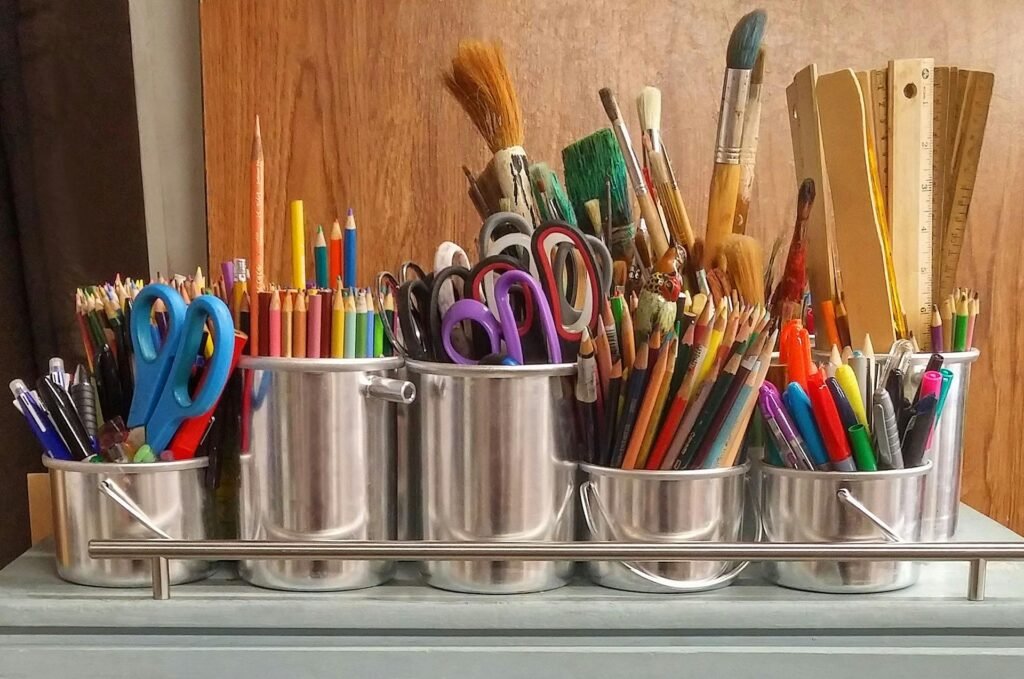
Recommended Homeschooling Art Supplies (Affiliate-Friendly)
For those looking to bring these creative experiences home effortlessly, I’ve curated a collection of the most useful and versatile arts and crafts supplies available on Amazon. Each item has been hand-selected to inspire imagination, support skill-building, and make homeschool art time as seamless as possible. Full disclosure: some of the links below are affiliate links, which means I may earn a small commission at no extra cost to you—an easy way to support this blog while stocking your homeschool art corner with thoughtfully chosen tools.
Homeschooling Core Art Supplies
Watercolor paint set (washable)
Tempera paint sticks
Tempera paint bottles
Acrylic paint set (for older children)
Acrylic paint pens (for older children)
Multipurpose Paint brushes (variety pack: flat, round, detail)
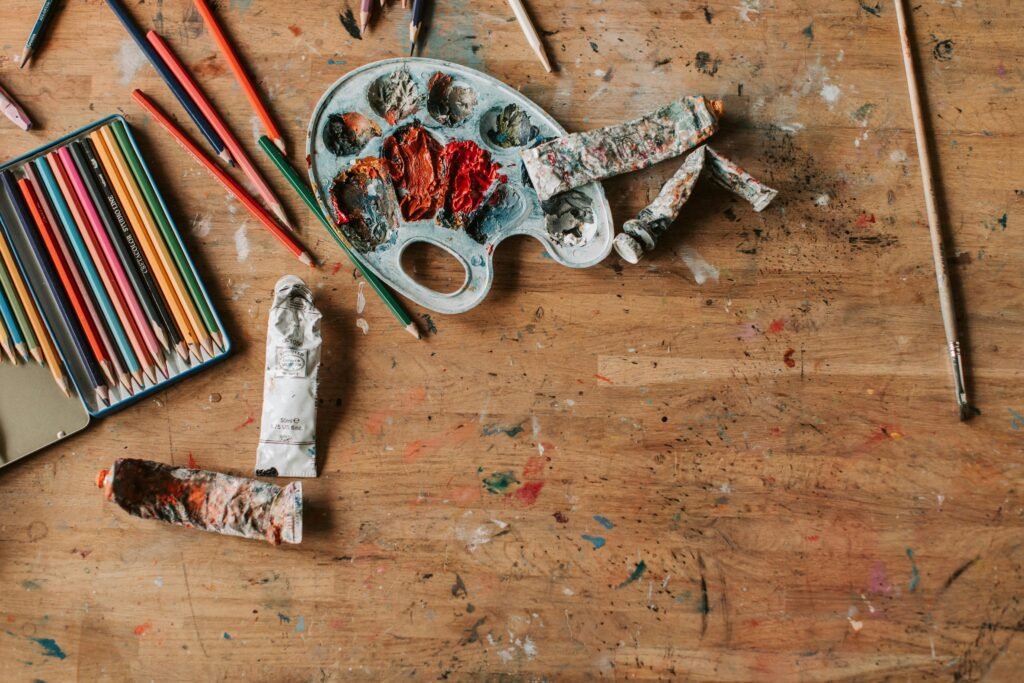
Mixed-media paper pad
Heavy cardstock paper
Watercolor paper
Sketchbooks (one per child)
Sculpting clay (oven bake)
Modeling dough (air- dry)
Creative Homeschooling Art Tools
Oil pastels
Crayons (yes, I’m a Crayola girl and they’re still valuable- also YES! it’s a bulk pack. TRUST ME!! Just do it. It’s cheaper in the long run!!!)
Washable markers (also bulk…because they run off on the legs they don’t have….)
Chalk pastels
Child-safe scissors (ages 4-7)
Child-safe scissors (ages 8+)
Glue sticks
Liquid glue
Painter’s tape (for borders and resist art)
Open-Ended Homeschooling Craft Materials
Pom-poms
Pipe cleaners
Craft sticks
Scrap fabric- we cut up old t-shirts, jeans, socks, or scraps of fabric from sewing projects.
Cardboard pieces- save them from used cereal boxes, package deliveries etc..
Recyclables (boxes, tubes, containers)
My favorite homeschooling craft storage cart is linked below. It makes everything super functional and clean-up is a breeze, especially with several kiddos under 10! Plus, having more than one cart can make for nice tabletops for individual projects for each of the kiddos too!!
Happy arts and crafting, learning and thanks for reading!!

- [Multifunctional Use]: Whether you are a blogger, celebrity, a beautician, a student or a craftsman, this storage drawer…
- [Multi-Purpose]:The drawer cart is made of sturdy MDF wood and high-quality PET plastic, the wooden desktop allows you t…
- [Pearly Drawers]: Each drawer tier is transparent so you can easily see the contents, and the drawer handles are designe…